What can a battery do for your business?
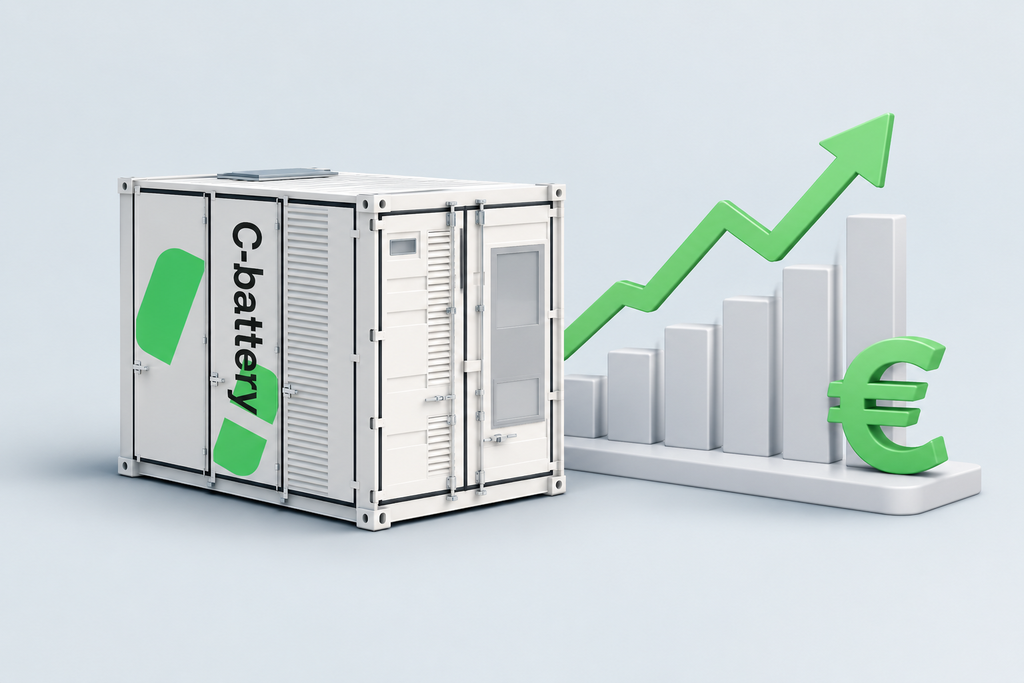
Your business pays for energy in more ways than the price per kilowatt hour. Peak demand, injection tariffs and a grid connection that limits what you can add all end up in your costs. A battery can reduce those costs, and it can earn money on top of that.
That gives you three main ways to make a battery pay off: optimise your own energy use behind the meter, trade on price differences, and offer grid balancing services. This article explains each one and what it can mean for your site.
1. Behind the meter: lower your own energy costs
Behind the meter means everything that happens on your side of the grid connection. The savings here are the most predictable, because they depend on your own consumption.
Store your excess solar
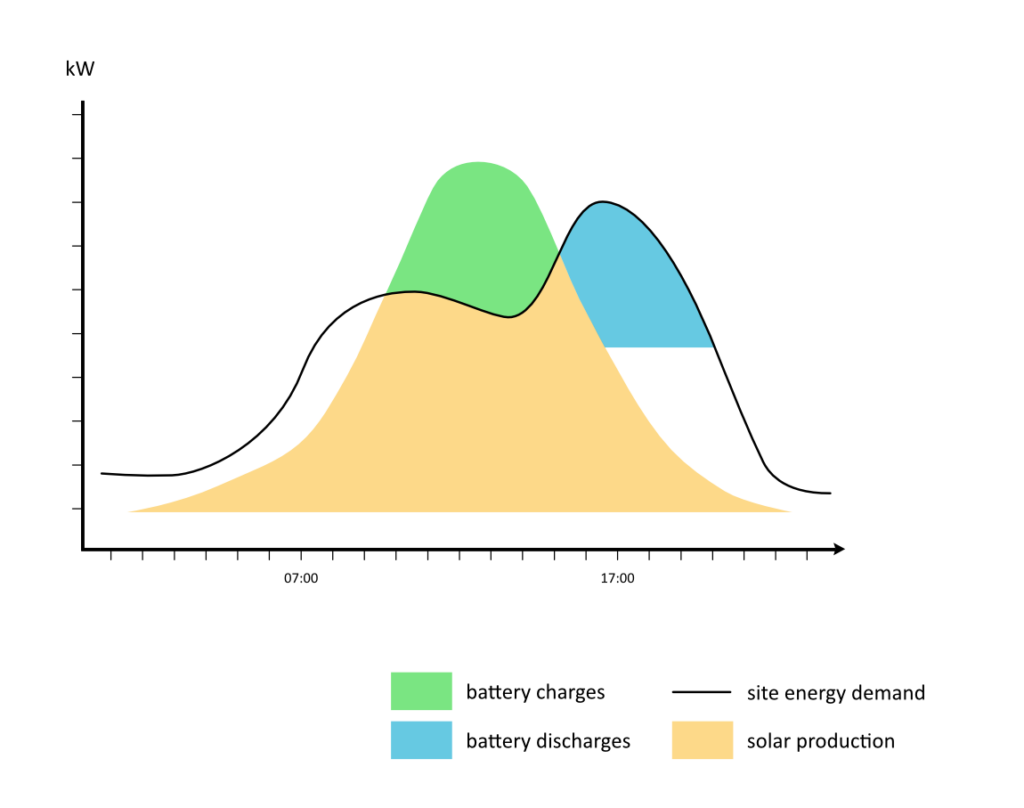
Solar panels often produce more than your site uses at midday. Without a battery, that surplus goes to the grid, and injection can come with tariffs. At the moments many installations produce at once, the price you receive can be low or even negative.
A battery stores the surplus so you can use it in the evening or the next morning. You avoid injection costs, use all the energy you generate, and buy less from the grid.
Flatten your peak demand
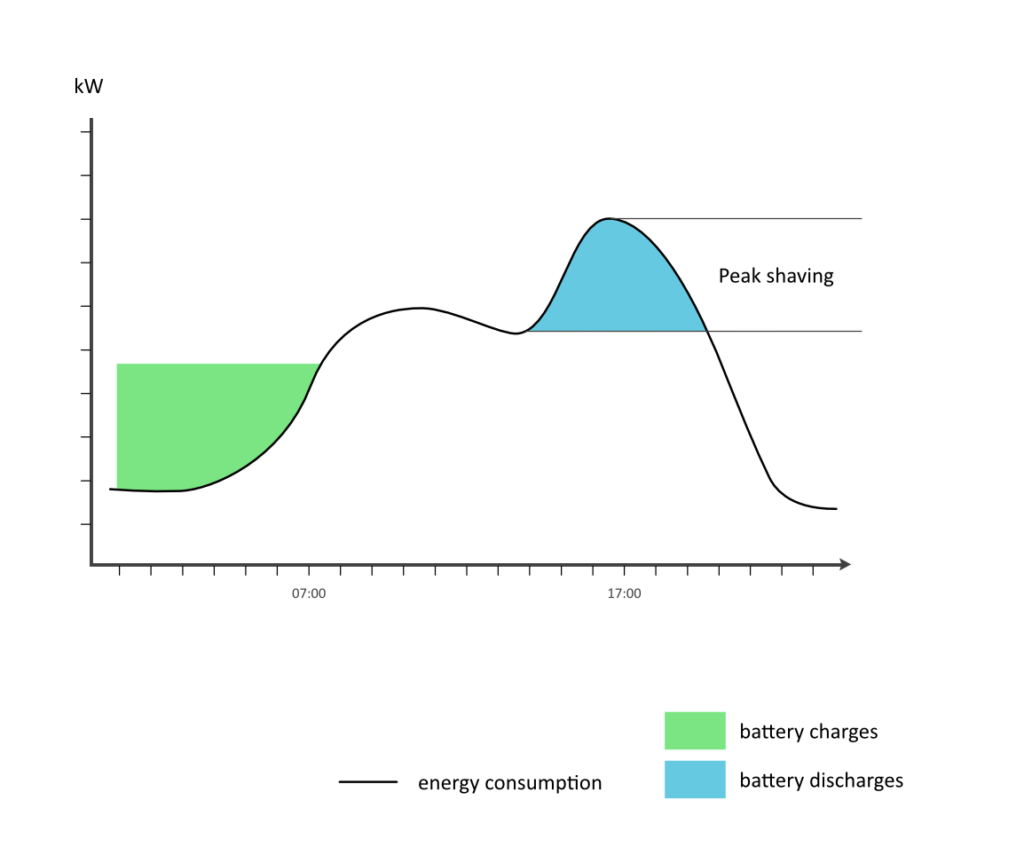
Grid costs often depend on your highest peak demand in a given period. A few minutes of high consumption, for example when several machines start at the same time, can set the price for the whole month.
The battery supplies the power during those peaks, so the grid only sees a flatter load.
This is called peak shaving, and it lowers your grid costs.
Avoid grid enforcements
Your grid connection sets a limit on the peak power you can draw. When you add production processes or EV chargers, that limit is often the first thing you hit.
A battery takes the peaks, so you can install more chargers or expand your site within the existing connection. This helps you avoid an expensive grid reinforcement and the waiting time that comes with it.
2. Use day-ahead market volatility
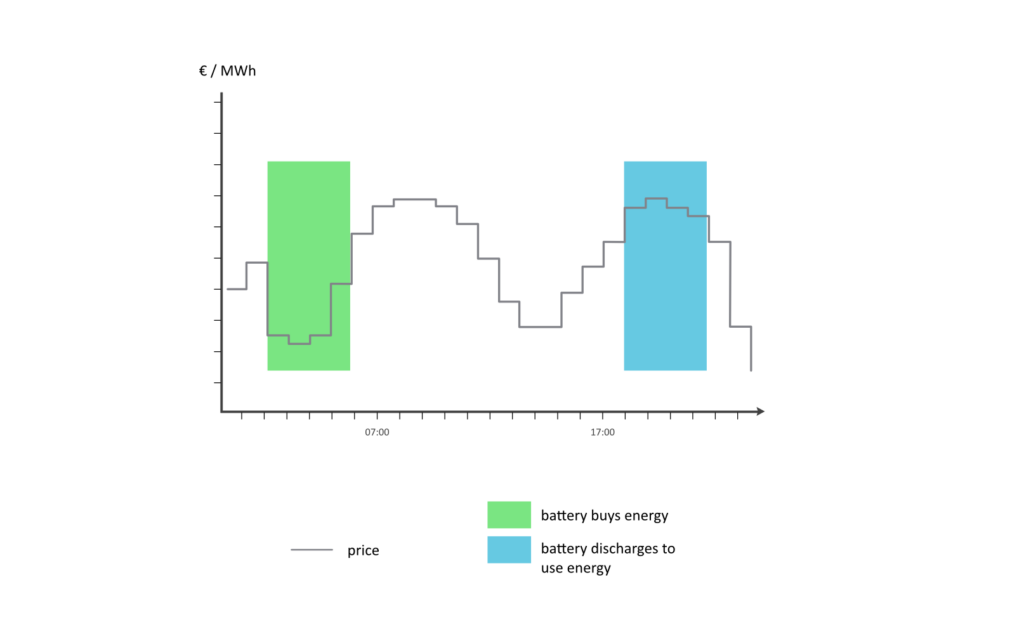
Energy prices change throughout the day. They peak in the morning and evening, and they drop when solar and wind production is high. At times they even turn negative, which means producers pay to get rid of their energy.
If your daily operations do not use the full capacity of your battery, you can put the unused part to work. The battery buys energy when it is cheap and sells it when it is expensive. The difference is an extra stream of revenue on top of your savings behind the meter.
In practice, software or an energy trader decides when to charge and discharge, based on price forecasts.
3. Grid balancing services
The electricity grid needs a balance between production and consumption at every moment. When they drift apart, the grid frequency moves away from 50 hertz. The transmission system operator (Elia in Belgium) buys reserve capacity to correct this quickly.
A battery reacts within a fraction of a second, which makes it well suited for this task. If you give your energy provider or a trader access to the controls of your battery, they offer part of its capacity to the grid operator. You get paid for keeping that capacity available, and often for the energy the battery delivers when it is called.
You stay in charge of how much capacity you make available. Your own needs, like peak shaving or backup, come first. Smaller batteries usually take part through a trader or aggregator who combines several sites into one offer.
FCR, aFRR and mFRR: the differences
The grid operator uses three types of reserve, each with its own role and response time. They work like a relay: the fastest reserve acts first, the slower ones take over.
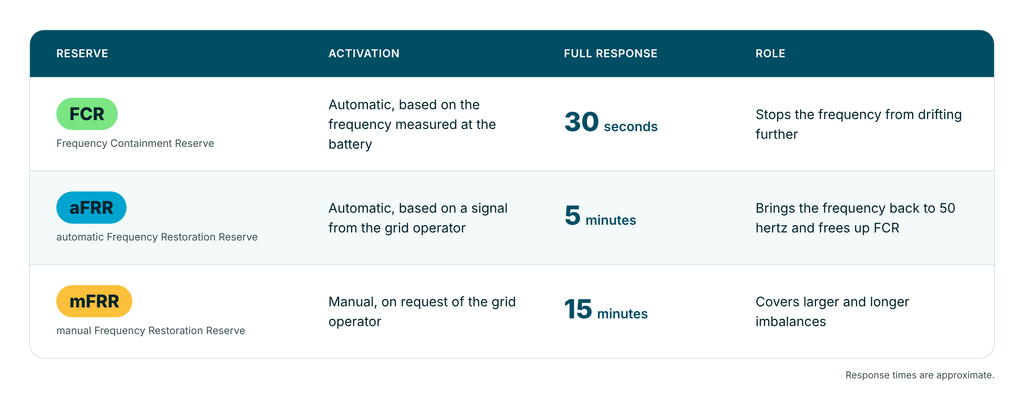
In short, FCR is the first response, aFRR is the automatic follow-up, and mFRR is the manual back-up for bigger events. Which one suits your battery depends on its size, its response speed and how much capacity you want to keep for your own use. A trader can combine them over the course of a day.
Which option fits your site?
A battery can earn money in many ways: lower grid costs behind the meter, trading on price differences, and grid balancing services. Many sites combine several of them.
What works best depends on your consumption profile, your solar production, your grid connection and the size of the battery. Not sure which combination fits your site? Our experts help you build your business case.
