Client case: Gardenas turns overcapacity into revenue
Garden shed manufacturer Gardenas has a large roof surface with an extensive solar installation. Until now, their payback model relied on green power certificates. Since that model isn’t sustainable in the long run, they looked for a new way to valorise their solar panels. With C-battery’s outdoor battery system, they now reduce injection costs during peak hours and monetise their surplus energy by selling it at the right moment.
Too much sun, too little demand
At their site in Dendermonde, Gardenas’s solar panels reach up to 300 kW peak, while the site only needs 100 kW. They couldn’t use most of their solar output themselves, and had to inject it into the grid during hours with high injection costs.
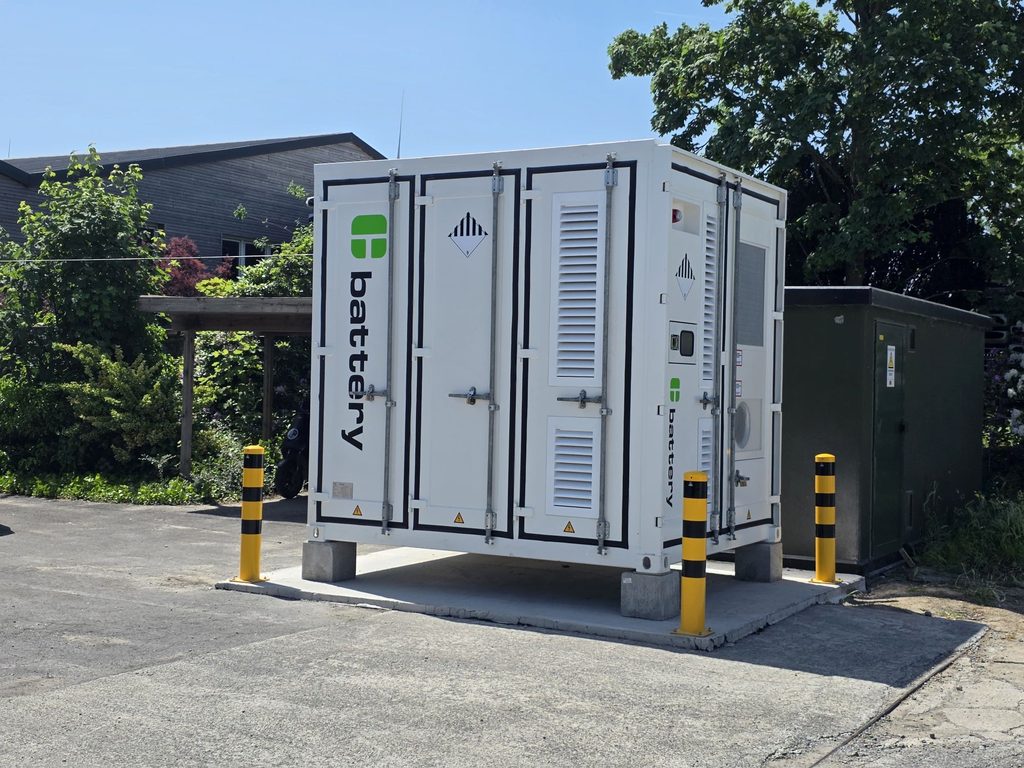
Together with installation partner TSG, we proposed an outdoor battery system with a capacity of 836 kWh. Gardenas is one of the first companies to use our renewed product: a 10-ft high cube container with a very high energy density.
The container isn’t a standard shipping container, it’s purpose-built for our battery system and manufactured entirely in Belgium. This minimises wasted internal space and results in a highly efficient battery.
Smart control, maximum return
With the new battery, Gardenas now stores around 750 kWh per day. They can use that energy later, for example once the sun has set.
The battery is continuously monitored and optimised by our Battery Management System (BMS), C-battery IQ. It tracks cell temperature, battery health, and charge/discharge efficiency, and sends an alert if the battery encounters a fault or needs maintenance.
To determine when the battery charges via the solar panels and when it discharges, Gardenas uses Eniris’s Energy Management System (EMS). C-battery IQ is compatible with any EMS, so Eniris integrated smoothly and the two systems now communicate seamlessly.
From injection cost to revenue
Beyond optimal use of their own solar energy, Gardenas also uses the battery to respond to the day-ahead market. That means they can store their energy surplus and sell it only once prices are high. Instead of injecting surplus energy immediately at high cost, they can now sell it during peak prices, and even profit from it.
The C-battery solution:
- High energy density: a compact, powerful system that captures and valorises the full overcapacity
- Compatible with any EMS: the integration with Eniris ran smoothly
- Safety and efficiency: C-battery IQ monitors the battery’s efficiency and safety, even under daily, intensive charge and discharge cycles
- Scalable: the system holds 836 kWh today and can easily be expanded to 1,045 kWh in the future