Client case: fast chargers without grid upgrade
A retail site in Rhisnes wanted to install fast chargers, but its grid connection did not allow for it. With C-battery’s system, installed together with Enersol, the site now runs two dual fast chargers on its existing connection. The battery also does more than support charging: it increases self-consumption and trades on dynamic energy prices.
Let the battery take the peak
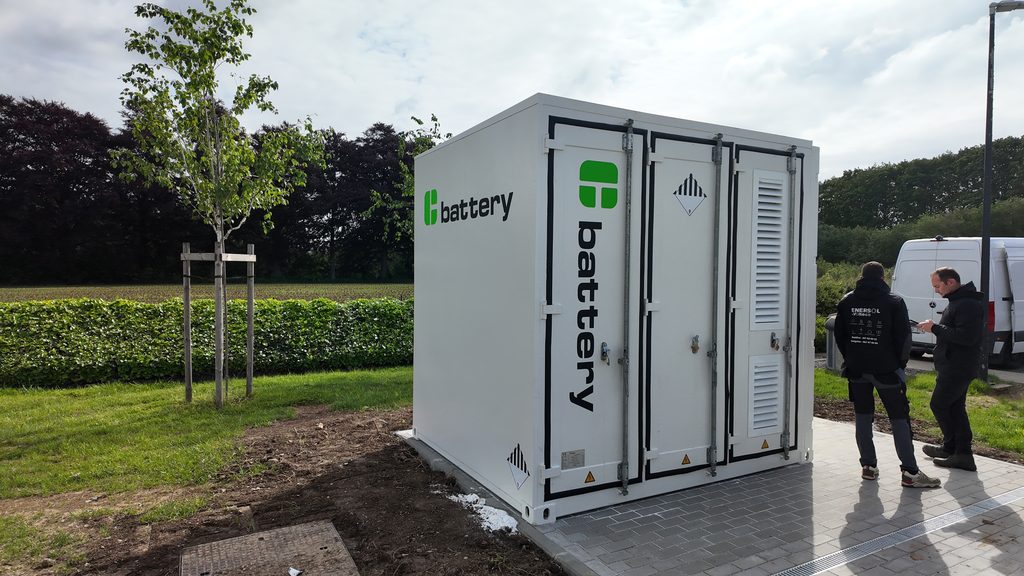
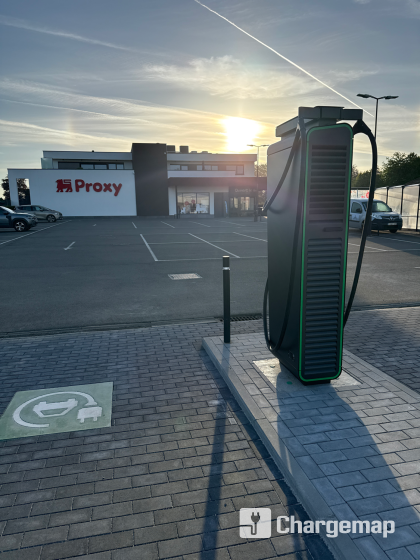
The site has a grid connection that the store largely uses itself. The operator wanted two dual fast chargers, which can draw up to 200 kW each at peak. After the store’s own consumption, only a small share of the connection is left, too little for the chargers. On the grid alone, they could not have been installed.
Fast chargers only draw that much power while a vehicle is charging, so the peak is short. The rest of the time they use very little, and a battery is the ideal solution for that profile.
Together with installation partner Enersol, we installed our battery behind the meter. When a vehicle charges, the power comes from the battery. Between sessions, the battery recharges at a much lower power level, so the existing connection is enough.
From grid constraint to revenue
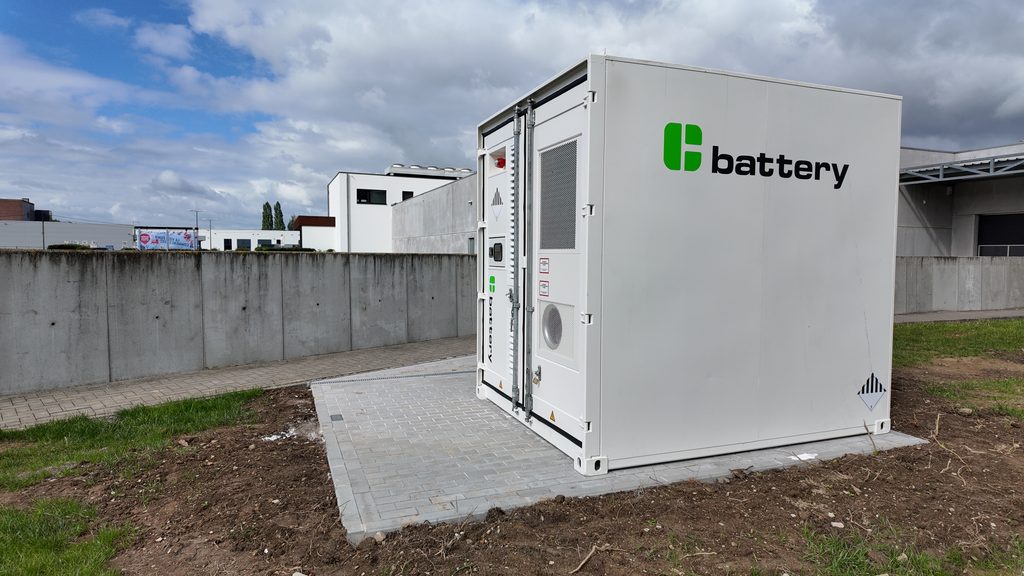
Part of the battery is reserved purely to guarantee that the chargers can always deliver. The rest works on dynamic energy prices: it buys electricity when it is cheap and sells it when it is expensive, all behind the meter. That way, the battery earns money at moments when it would otherwise sit idle.
What it delivers
A grid connection that seemed too small for fast charging is now a working charging site. The battery made possible what the grid alone could not. Today the chargers handle about ten sessions a day, sometimes as many as 20, which adds up to more than 300 a month. And while it keeps those chargers running, the battery also earns extra money on dynamic prices.
The C-battery solution
- Fast charging on a limited connection: the battery covers the charging peak, so the existing grid connection is enough.
- Reliable charging: part of the battery is reserved to guarantee that the chargers can always deliver.
- Additional revenue: the rest of the battery buys at low prices and sells at high prices on dynamic tariffs, behind the meter.
- Higher self-consumption: the battery makes better use of the site’s own energy.