Grid congestion? A microgrid battery keeps you growing
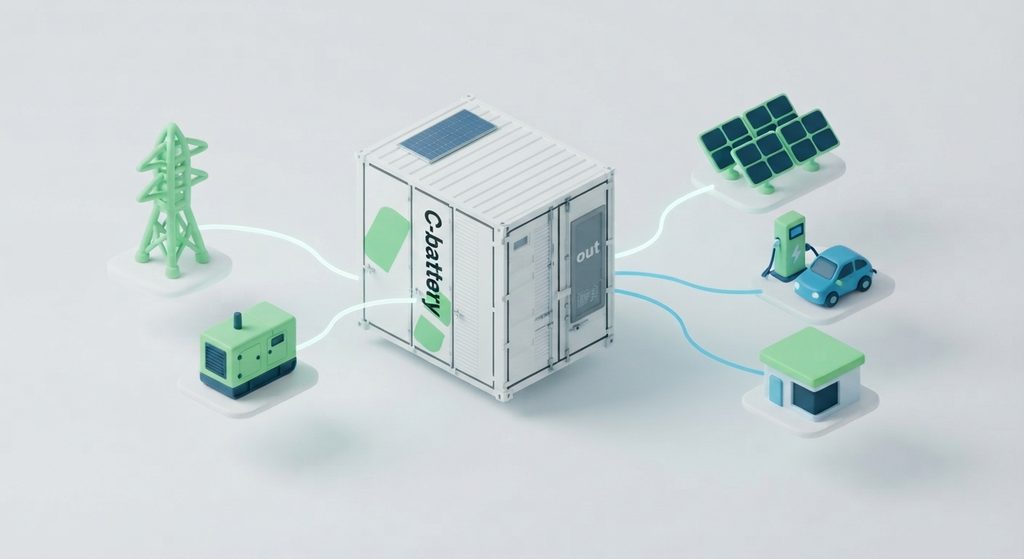
The waiting list for a grid connection, whether new or heavier, keeps growing. In Wallonia alone, 1,066 connection requests were still waiting at the end of June 2026. Governments and grid operators across Belgium and the Netherlands are working on flexible connections and prioritisation to make better use of existing grid capacity until structural investments are in place. But industry and mobility are still electrifying faster than the grid can keep up.
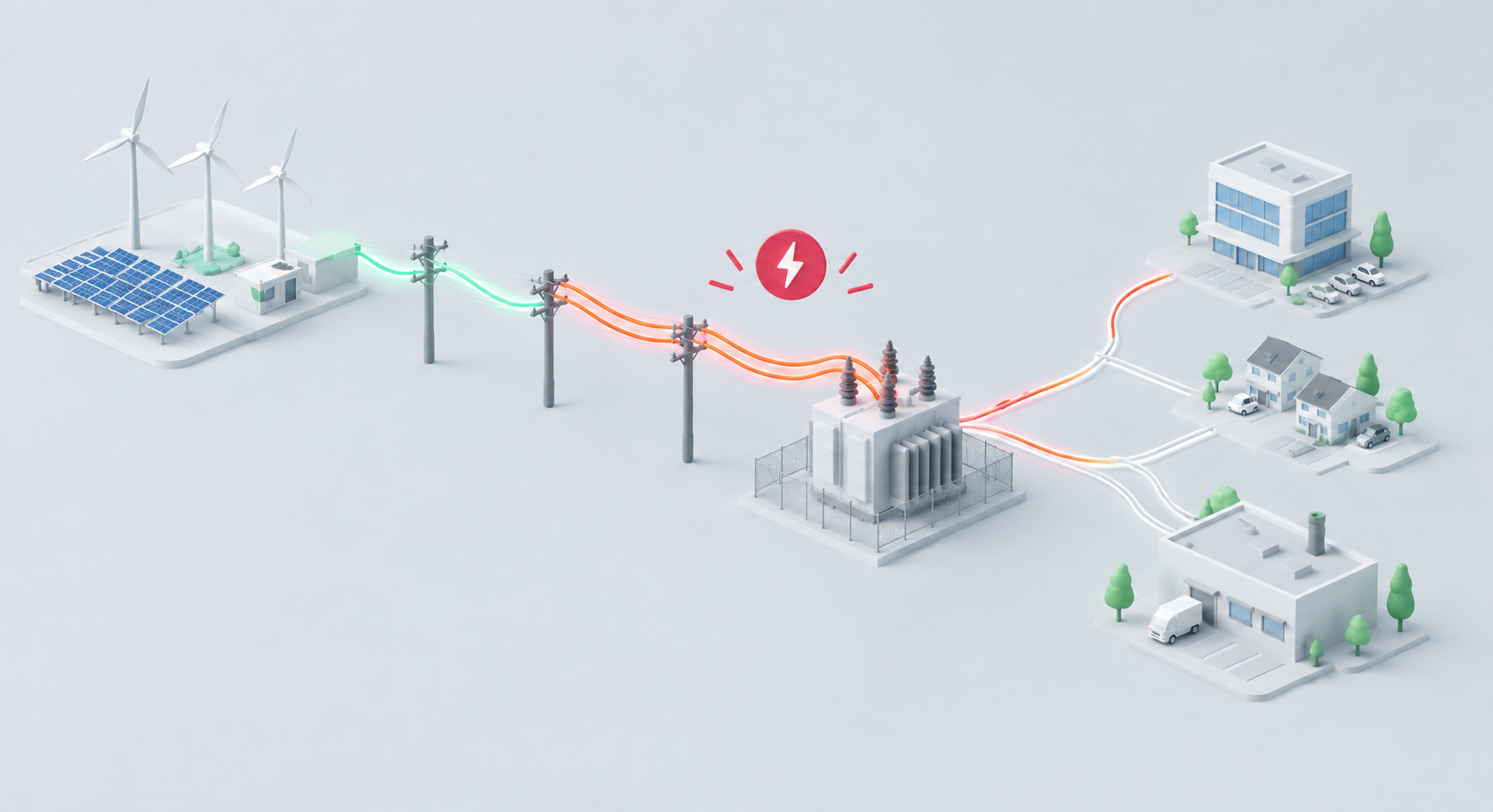
For companies that want to grow, electrify or install new charging infrastructure, the choice is simple: wait, or find a way to keep operating within their current connection. That is exactly what a microgrid battery makes possible.
Where the problem really lies: not your consumption, but your peak
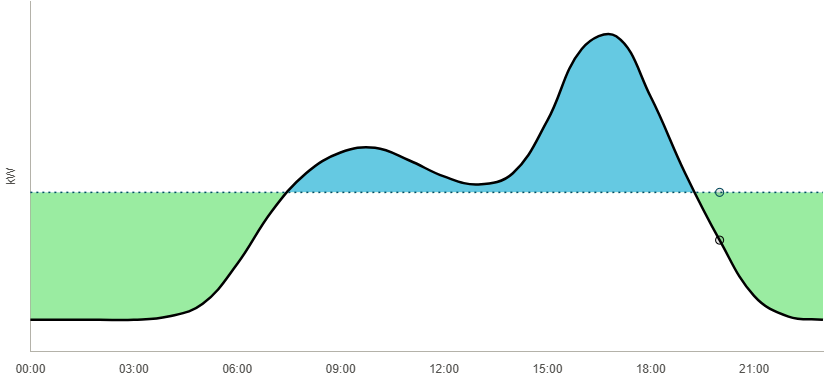
Grid congestion is rarely about your average consumption. It’s about the peak: the quarter-hour when compressors, chargers and machines all start up at once and your demand far exceeds your contractual connection capacity. That peak determines whether you fit within your connection, and it also drives a large part of your capacity tariff.
A battery doesn’t solve this by supplying more energy, but by flattening peak demand: peak shaving. It absorbs the short-term load and supplies it itself, so the grid only sees your base consumption.
Flexible contracts: faster, but with a condition
Grid operators increasingly offer flexible connection contracts. In return for a lower tariff or a faster route to a connection, you accept that your available capacity may be limited at busy moments. Some contracts guarantee your full capacity most of the time and only ask you to scale back when the grid is under pressure. Either way, a flexible contract can get you connected despite the queue.
But not every business can simply scale back. Many grid users have no backup for the hours when they are not allowed to draw power, or run processes that cannot just stop. A battery behind your connection is exactly that backup.
A concrete example
Many SMEs and production sites have a standard connection of 56 kVA, originally sized for lighting, office equipment and light machinery. As soon as the company wants to install charging points for its fleet or add an energy-intensive process, however, actual power demand quickly climbs to 300 to 500 kVA. A request for that extra capacity from the grid operator joins the same waiting list as every other grid reinforcement file, with a lead time that, given the current backlog, can run to years.
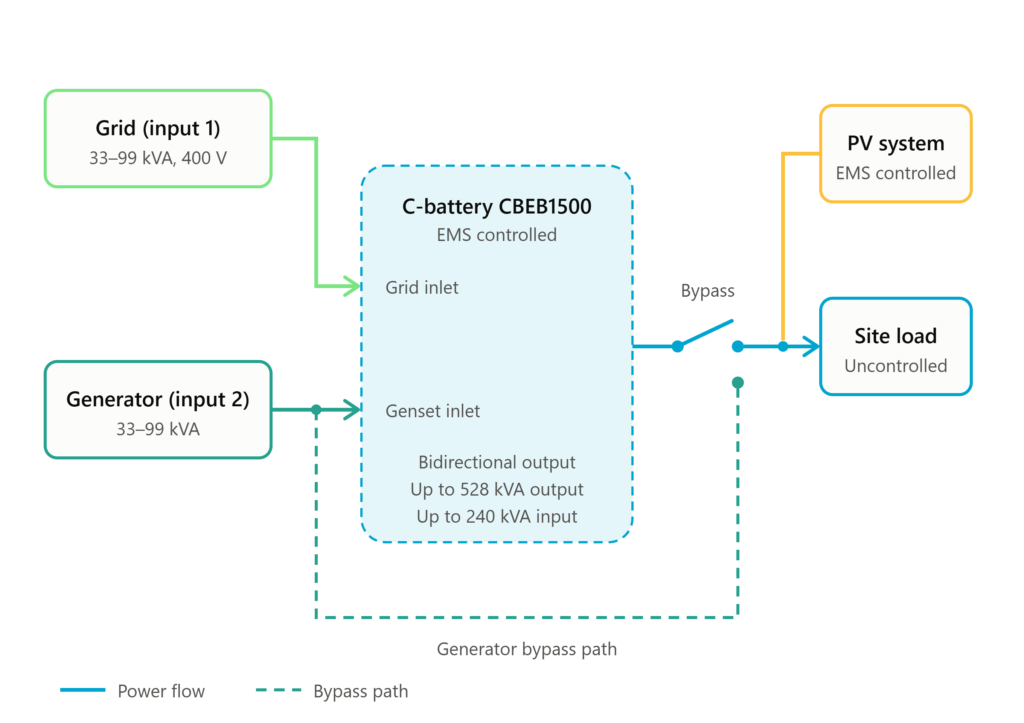
A 1 MWh battery with a 500 kW output changes the equation. The battery combines several energy sources as input and delivers the requested power when needed. In this scenario, it works like this:
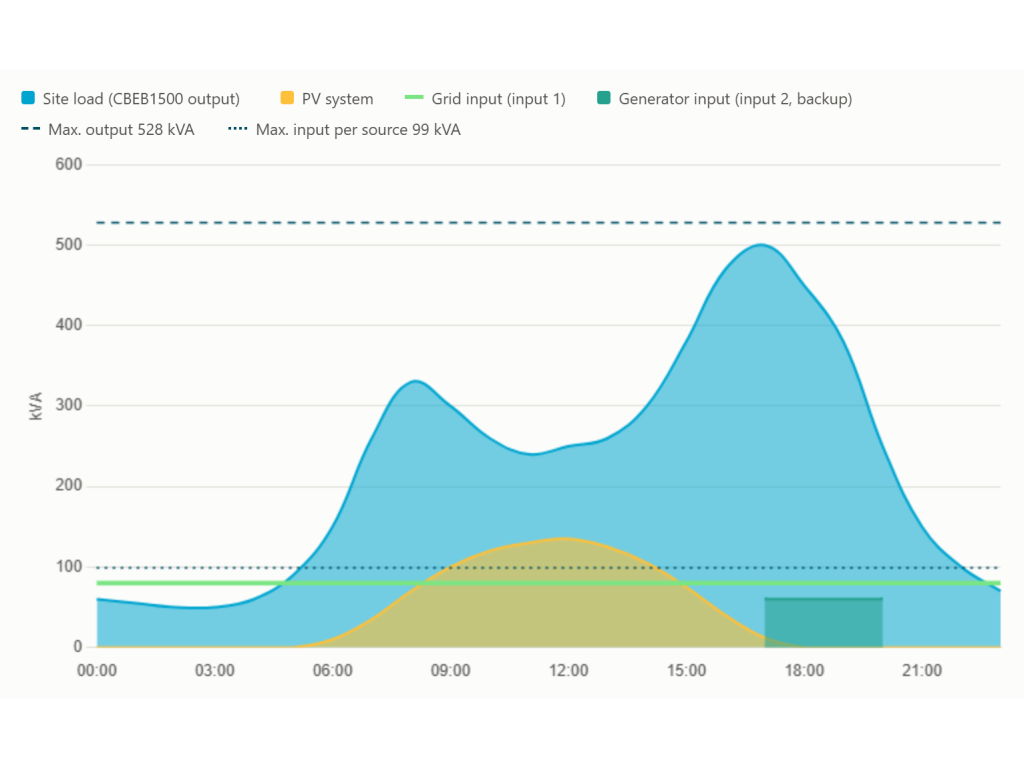
- Continuous charging from the grid (56 kVA): the battery draws a constant, low power from the existing connection, well within the permitted 56 kVA, spread over the hours without peak demand.
- Solar power as an additional input: during the day, a solar installation tops up the battery without putting extra load on the connection, and without having to feed surplus production back into a grid that has no room for it anyway.
- Discharging at peak moments (up to 500 kW): as soon as the charging points or the process demand power, the battery supplies it itself, up to 500 kW at a time. Because input and output are separate, the grid only sees the battery’s slow, continuous charging current, not the peak of the charging points.
- Diesel as a safety net: in a period of little sun and high demand, a small diesel generator can step in as a third input, so the battery stays sufficiently charged.
This way, the same 56 kVA connection covers an actual power demand of 300 to 500 kVA, without grid reinforcement and without a waiting list.
Why a microgrid battery is so fast
A C-battery microgrid battery is designed never to feed back into the grid. That may seem like a detail, but it is precisely what speeds up the process. A grid study and a grid decoupling panel are generally required when an installation can feed power back, not when it never does by design. Because the battery rules out that possibility, that entire administrative and technical approval step falls away in most cases.
A grid reinforcement file can take years today, and a new connection goes to the back of a queue of more than a thousand files. A microgrid battery doesn’t depend on the grid. For companies that want to electrify, expand or install charging infrastructure now, that is the difference between starting today and waiting years.
Waiting is not the only way forward
The grid won’t be fixed overnight, and the waiting list for new connections will keep growing for the time being. Companies that want to grow today within their existing connection don’t have to wait. A properly sized microgrid battery makes that possible, without you having to change anything about the grid itself.